Oct 5, 2026Resources
Industrial Valves & Fittings Technical FAQ
Practical answers to common questions about tube fittings, valves, threads, tubing, materials, pressure ratings and RFQ specifications.
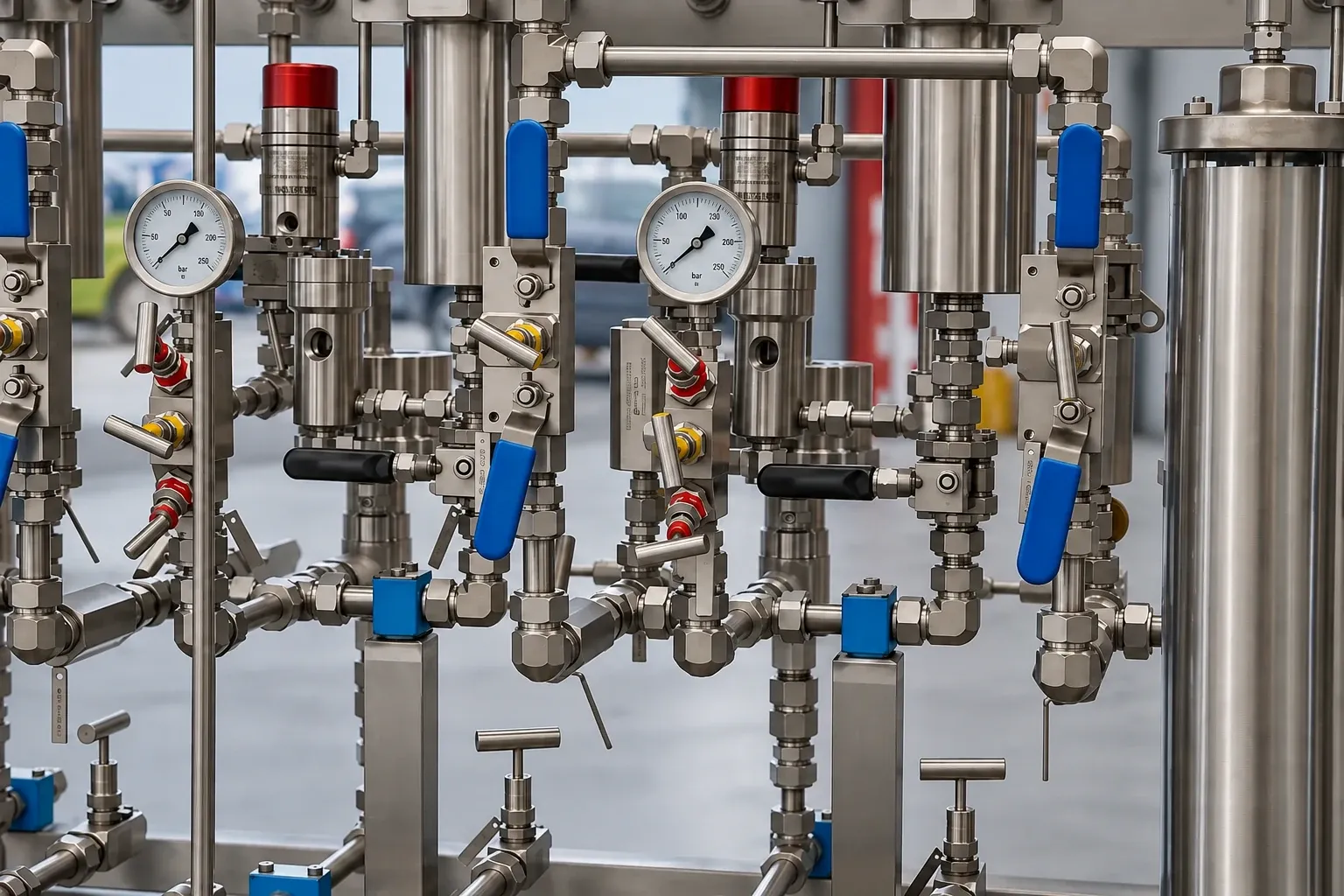
Industrial Valves & Fittings: Technical FAQ for Buyers
Many sourcing problems begin with a product description that is technically incomplete.
“1/2-inch stainless fitting.”
“316 valve.”
“High-pressure quick coupling.”
None of these is usually enough to select the correct component.
Below are practical questions buyers, distributors and engineers commonly need to resolve before quotation or ordering.
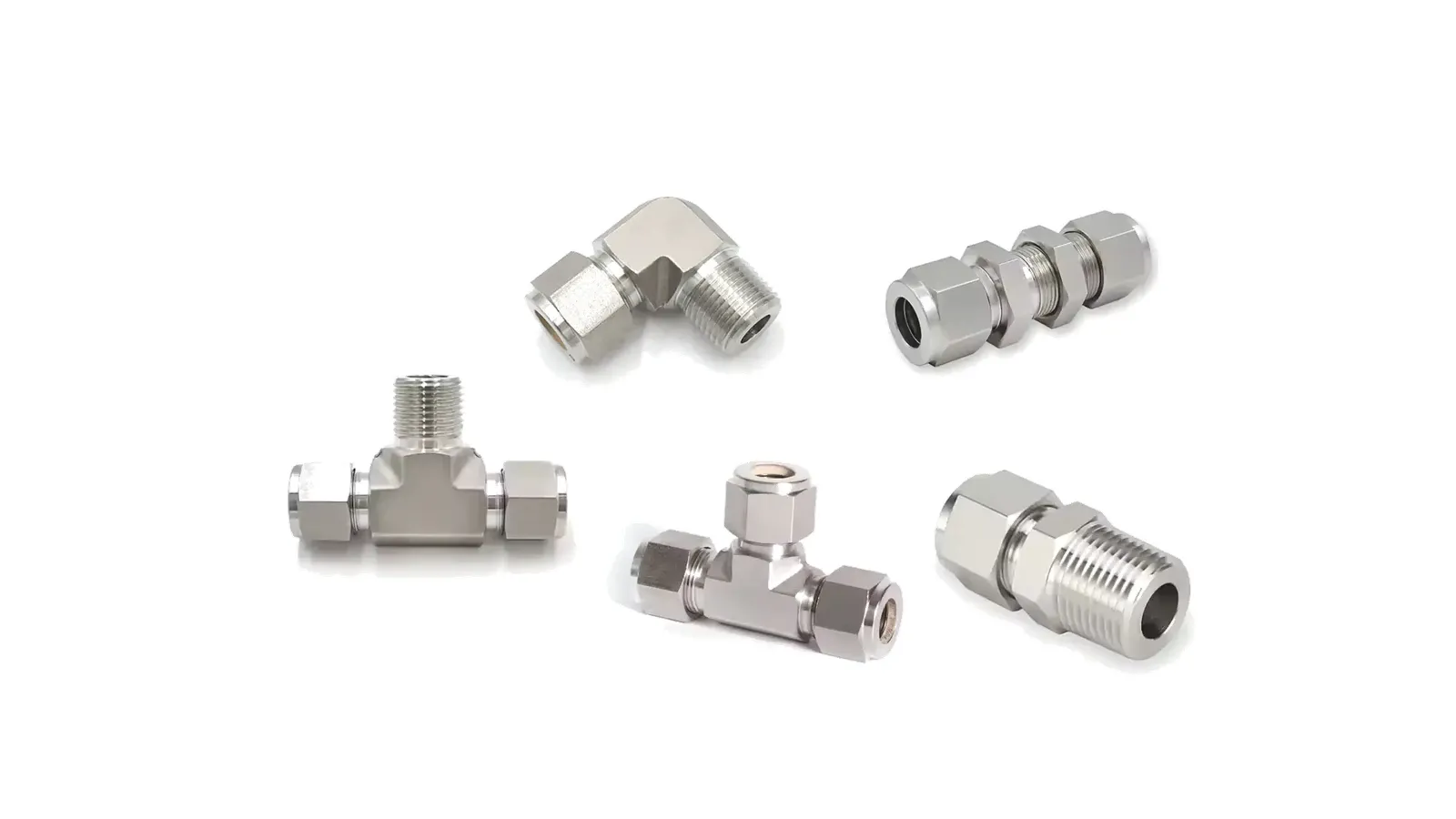
1. What information should I provide for a tube fitting RFQ?
Start with:
- fitting configuration;
- tube outside diameter (OD);
- end connection type and size;
- material;
- quantity;
- operating pressure and temperature where relevant;
- process medium or application where compatibility matters;
- required documentation or standard.
For replacement parts, provide the existing part number, drawing or clear photographs if available.
Do not describe tubing only by a nominal “pipe size.” Tube fittings are normally selected around the actual tube OD.
2. Are NPT, BSPP and BSPT interchangeable?
No. They are different thread systems.
NPT is a tapered thread with a 60° thread form.
BSPT is also tapered but uses a 55° thread form.
BSPP is parallel rather than tapered and typically relies on a separate sealing arrangement rather than creating the pressure seal through thread interference.
Some nominal sizes may appear visually similar, which is exactly why thread identification errors occur.
When the thread is unknown, confirm:
major diameter + pitch/TPI + tapered or parallel + male/female + sealing method.
Do not identify a thread from nominal size alone. Parker's instrumentation technical guide likewise distinguishes BSPP, BSPT and NPT by thread form and sealing method.
3. What is the difference between tube OD and pipe size?
They are different sizing systems.
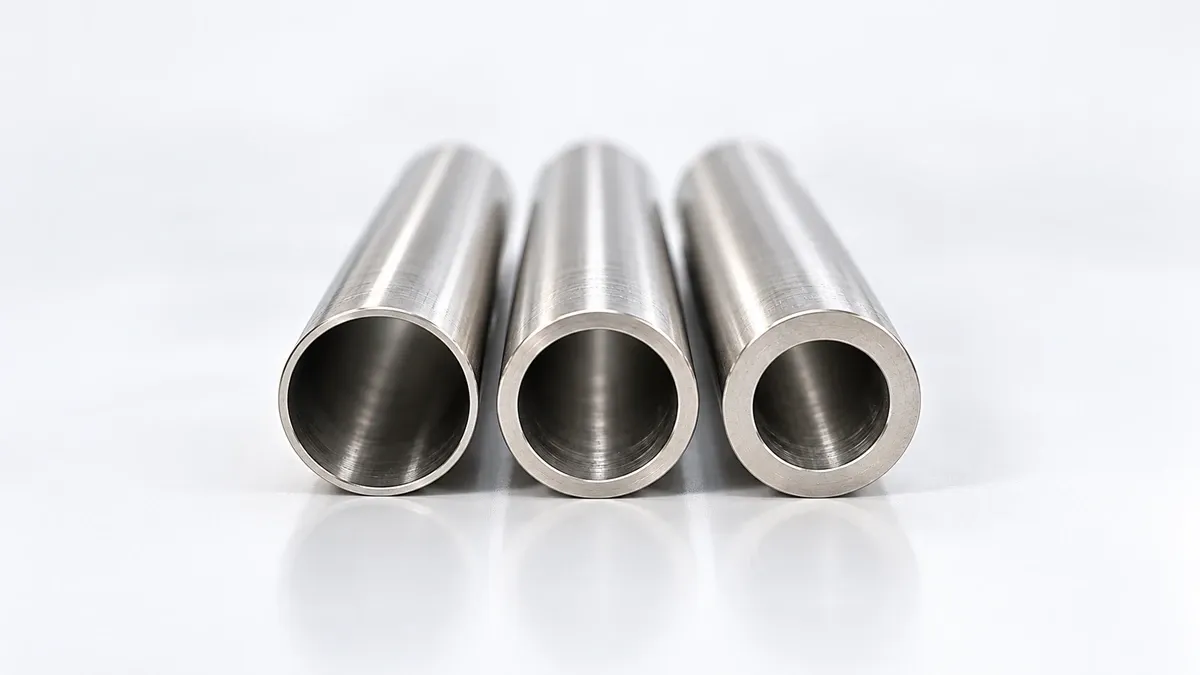
Instrumentation tubing is commonly specified by its actual outside diameter and wall thickness.
Pipe is normally identified by a nominal pipe size, which does not necessarily equal the measured outside diameter.
Therefore:
“1/2-inch tube fitting”
and
“1/2-inch pipe fitting”
do not describe the same connection.
Always identify whether the connection is for tube, pipe or hose.
4. Is 316 the same as 316L stainless steel?
No.
316L is the lower-carbon version of 316 stainless steel. The required grade should follow the applicable product specification, manufacturing route, welding requirement, corrosion environment and project specification.
Do not substitute one grade for another simply because both belong to the 316 stainless-steel family.
If material certification is required, state the exact grade and documentation requirement in the RFQ.
5. Can I choose a fitting based only on pressure rating?
No.
Pressure is only one selection variable.
For a fluid-system component, buyers may also need to consider:
- temperature;
- process medium;
- material compatibility;
- tubing material and wall thickness;
- connection type;
- seal material;
- vibration;
- external environment;
- installation conditions.
For tube-fitting systems in particular, tubing quality, hardness, wall thickness, surface condition and compatibility with the fitting can affect connection performance. Swagelok's published tubing guidance similarly treats tubing as an integral part of fitting selection rather than an independent commodity.
6. What information is needed to select an instrumentation valve?
At minimum, identify:
- valve function;
- process medium;
- normal and maximum pressure;
- operating temperature;
- inlet and outlet connections;
- required flow;
- body material;
- seat/seal material where applicable;
- actuation requirements;
- quantity.
Start with function, not valve appearance.
For example:
- isolation;
- flow adjustment;
- directional control;
- check/non-return function;
- instrument isolation/equalization.
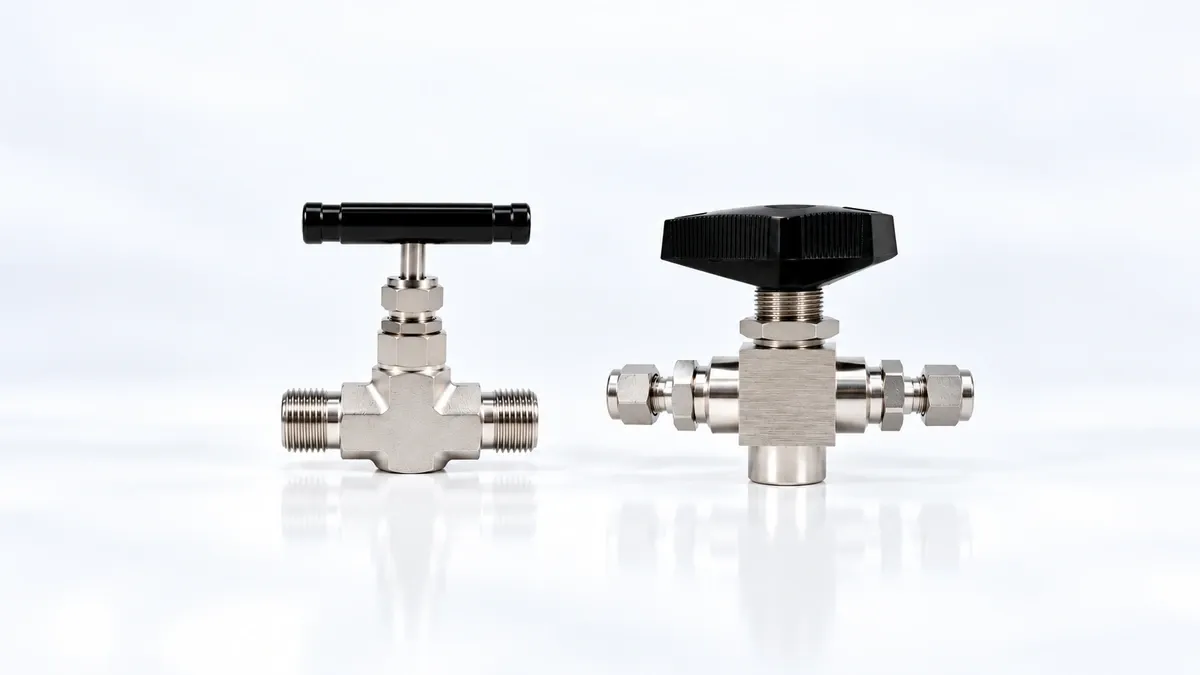
A ball valve and a needle valve may both connect the same two lines, but they are designed for different control functions.
Established valve-selection guidance likewise begins with valve function and system conditions before moving to configuration details.
7. What is the difference between a ball valve and a needle valve?
A ball valve is commonly used for relatively quick on/off isolation.
A needle valve uses a stem-and-needle arrangement that allows more gradual adjustment of the flow path and is commonly used where finer flow regulation or controlled isolation is needed.
Selection still depends on the actual pressure, temperature, medium, flow requirement and valve design.
Do not substitute one for the other solely because the end connections match.
8. How do I specify a replacement fitting or valve if I only know the existing part number?
Send the existing manufacturer and complete part number first.
If that is unavailable, provide:
- clear photographs;
- overall dimensions;
- connection dimensions;
- thread measurements;
- tube OD;
- body configuration;
- material marking;
- pressure/temperature requirement;
- application.
A cross-reference should be treated as a selection starting point, not automatic proof of interchangeability.
Final suitability should be confirmed against dimensions, materials, ratings and connection details.
9. Can components from different tube-fitting manufacturers be intermixed?
Do not assume they can.
Different manufacturers can use different ferrule geometry, body geometry, material condition, tolerances and installation requirements.
Visual similarity or the same nominal tube size does not establish compatibility.
Where an existing fitting system must be maintained, identify the installed system before replacing individual nuts, ferrules or bodies.
Major fitting manufacturers themselves caution against uncontrolled intermixing of fitting components.
10. What information should I provide for a hose assembly?
Provide:
- hose type if known;
- inside diameter or required size;
- overall assembly length;
- end connection on each side;
- end orientation where relevant;
- operating pressure;
- operating temperature;
- process medium;
- movement/flexing requirement;
- environmental exposure;
- quantity.
For replacement assemblies, photos and dimensional information can significantly reduce specification errors.
11. What documents should I request with the order?
It depends on the project.
Possible requirements include:
- Certificate of Conformity;
- material certificate / MTC / MTR;
- inspection or test records;
- datasheets;
- drawings;
- traceability information;
- project-specific compliance documents.
Specify these before ordering.
Do not assume that the phrase “full certificates” has the same meaning to every supplier.
12. What should I send if I am not sure of the exact specification?
Send what you actually know.
The most useful starting information is often:
Application + medium + pressure + temperature + connection + material + quantity
Then attach any available:
- drawing;
- datasheet;
- existing part number;
- equipment model;
- clear product photographs.
It is safer to mark an unknown parameter as “to be confirmed” than to guess.
Before You Request a Quote
For a faster technical review, send:
Product type
Size / connection
Material
Pressure
Temperature
Medium
Quantity
Required standards/documents
Existing part number or drawing, if applicable
A technically complete RFQ reduces back-and-forth and makes quotations easier to compare.