Valve Manifolds
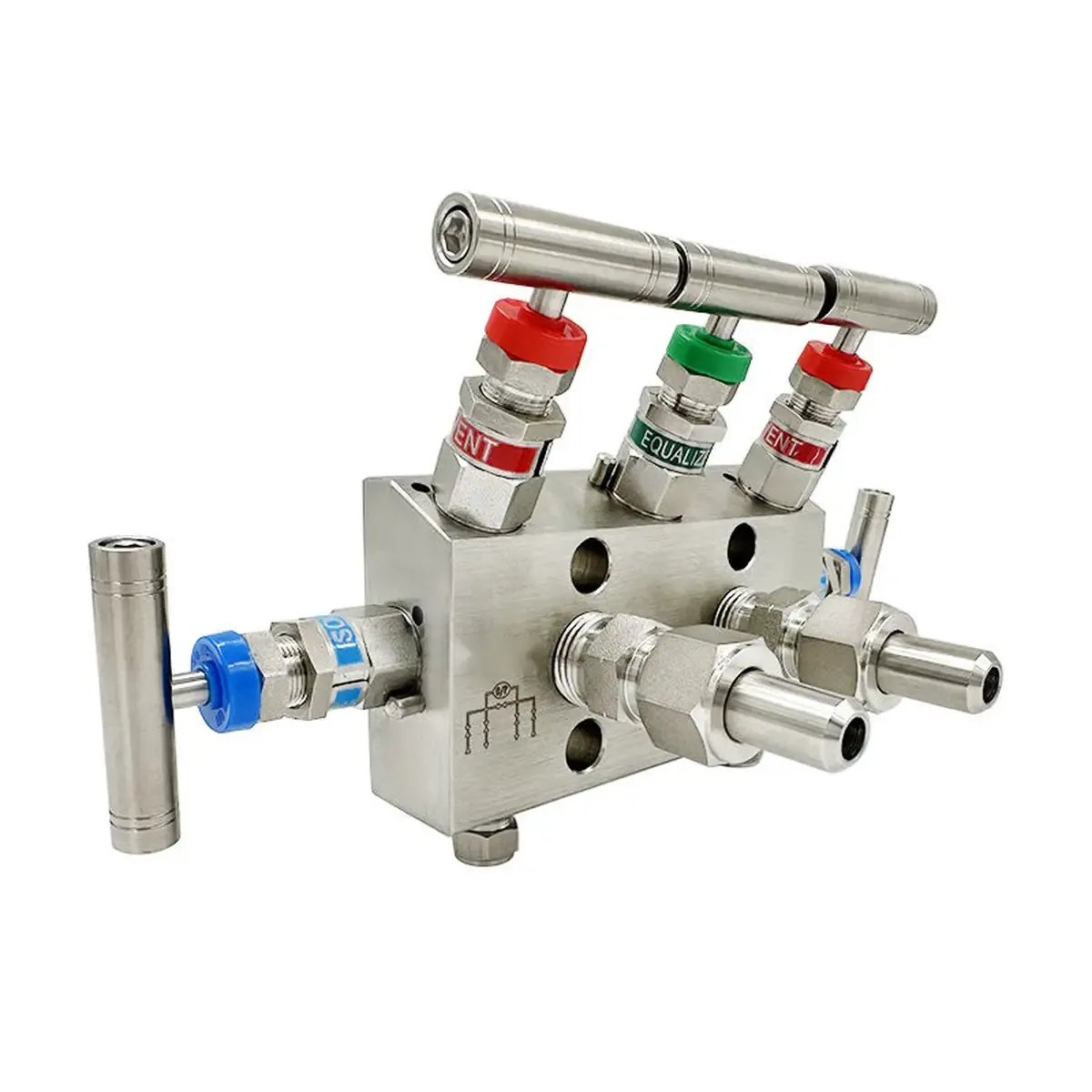
Stainless Steel 5-Valve Instrument Manifold
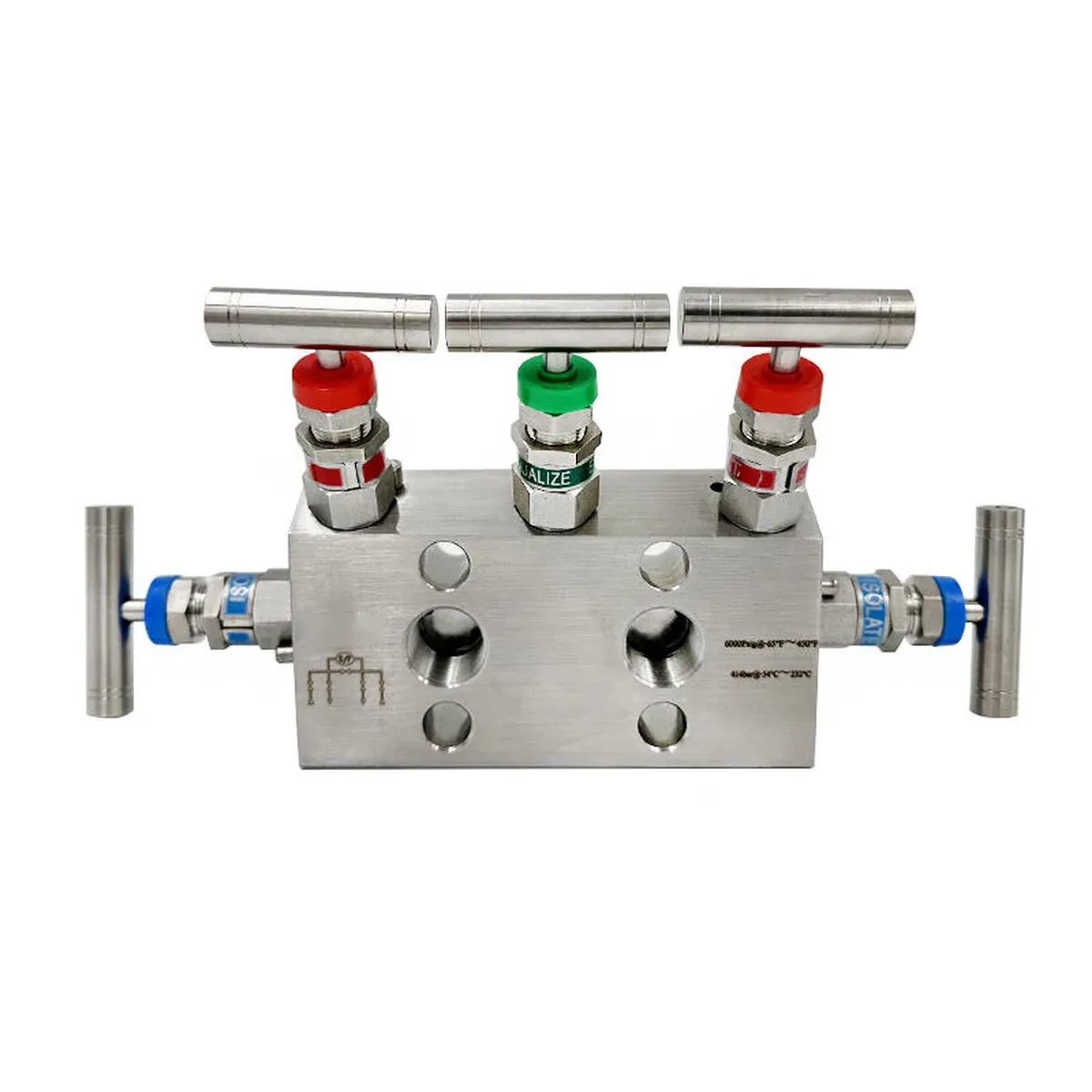
Stainless steel 5-valve instrument manifold designed for isolation, equalization and venting in differential-pressure measurement systems. The integrated manifold combines two isolation valves, one equalizing valve and two vent valves in a compact block configuration for differential-pressure instrumentation.
Specifications
- Product Type
- 5-Valve Instrument Manifold
- Body Material
- Stainless Steel
- Valve Configuration
- 2 Isolation Valves + 1 Equalizing Valve + 2 Vent Valves
- Body Configuration
- Integrated Block Manifold
- Instrument Application
- Differential Pressure Measurement
- Operation
- Manual, T-Handle
Stainless Steel 5-Valve Instrument Manifold
The Stainless Steel 5-Valve Instrument Manifold combines isolation, equalization and venting functions within a compact manifold body for differential-pressure measurement systems.
Its five-valve configuration consists of two isolation valves, one equalizing valve and two vent valves, allowing the high- and low-pressure sides of a differential-pressure instrument to be isolated, equalized and vented through independently operated valves.
Key Features
- Stainless steel manifold construction
- Five-valve configuration
- Two isolation valves, one equalizing valve and two vent valves
- Independent manual valve operation
- Integrated block manifold design
- Designed for differential-pressure instrumentation
- Separate venting functions for the high- and low-pressure sides
- T-handle operation for each valve
Isolation, Equalizing and Vent Functions
The manifold incorporates five independently operated needle valves within a single body.
Two isolation valves control the high- and low-pressure process paths to the instrument. The equalizing valve provides a controlled connection between the two sides, while two separate vent valves provide independent venting paths.
This integrated arrangement combines the primary functions required around a differential-pressure instrument while reducing the need for multiple separate valves and interconnecting components.
For Differential-Pressure Instrumentation
Five-valve manifolds are used with differential-pressure instruments where the high- and low-pressure sides require independent isolation together with equalizing and venting functions.
Compared with a three-valve arrangement, the additional vent valves provide dedicated venting paths for the two sides of the instrument system.
Correct valve operating sequence should always follow the requirements of the instrument and the specific process system.
Integrated Manifold Design
Combining five valve functions in one manifold body provides a compact interface between process connections and differential-pressure instrumentation.
The integrated design can reduce the number of individual valves, fittings and external connections required compared with an assembly constructed from separate components.
Actual mounting arrangement and mating connections should be confirmed according to the instrument interface and process piping configuration.
Typical Applications
5-valve instrument manifolds are commonly used in differential-pressure measurement systems where isolation, equalization and independent venting are required, including flow measurement, level measurement and other process-instrumentation applications using high- and low-pressure sensing lines.
Application suitability should be confirmed according to process media, operating pressure, temperature, connection requirements, instrument interface and material compatibility.
Selecting the Right Configuration
When specifying a 5-valve instrument manifold, provide the required process connections, instrument-side connection or mounting interface, operating pressure, temperature, process media and quantity.
For replacement applications, existing part numbers, drawings, dimensional information or photographs can also be provided for configuration review.
Request a Quote
Send us your required connections, instrument interface, operating pressure, temperature, process media and quantity. Our team will review the application and help confirm a suitable 5-valve instrument manifold configuration.